
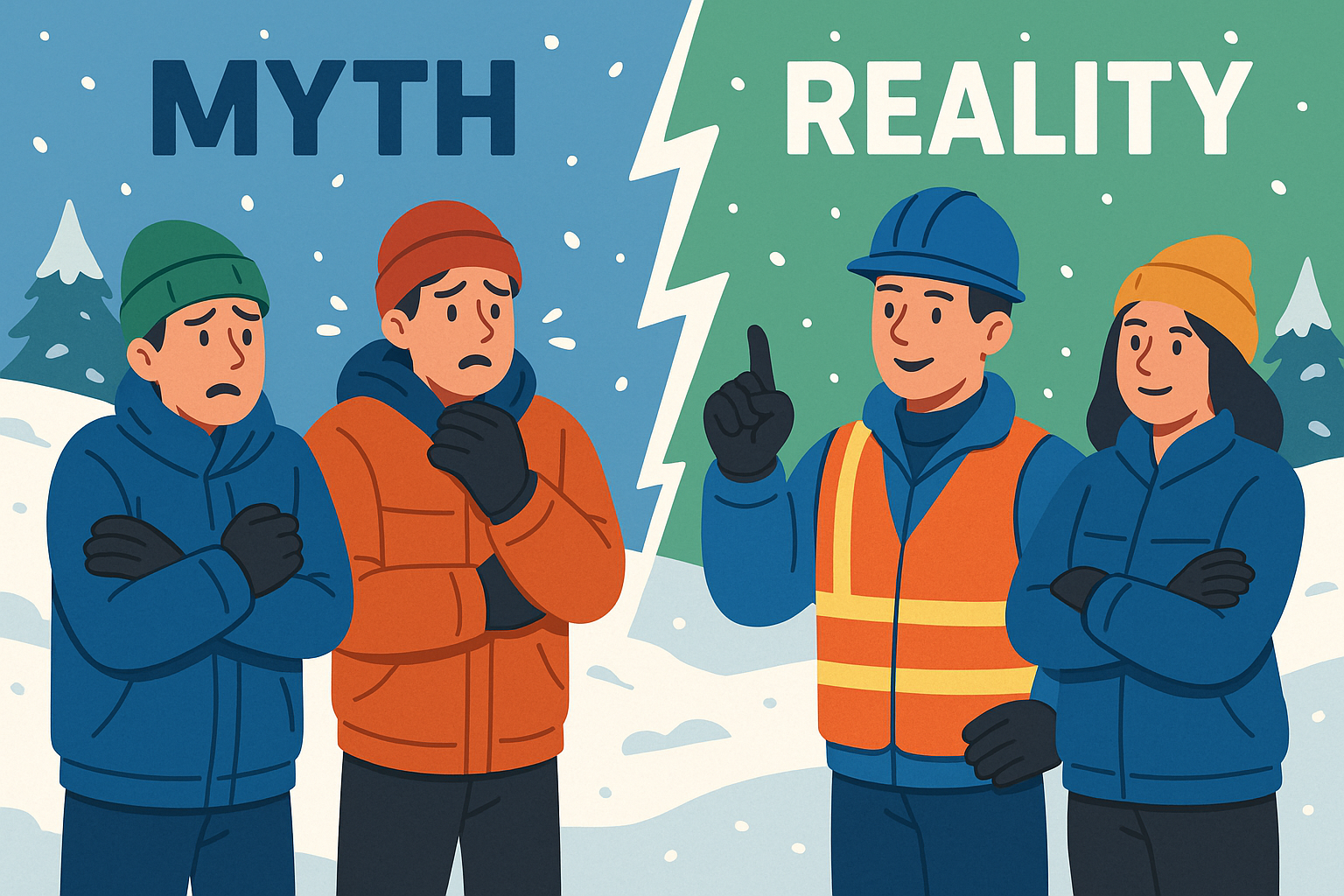
Every beginner entering their first cold season at the year of 2026 throws the same winter work myths and seasonal work myths that also are presented at truck stops, training yards, and break rooms. Some of the stories sound frightening, others reassuring, and many are just schoolyard tales from people who can barely recall their first winter job — classic schoolyard tales about winter jobs. But when it is getting colder, new drivers are not interested in rumors; they need straightforwardness, winter work facts, winter employment facts, and a solid notion of what winter work actually requires. Bust common myths about working in cold temperatures and cold weather jobs. Learn what’s true and false regarding winter work, staying warm, and more for beginners, a kind of true or false winter work check for rookies.
This guide discloses the most commonly misunderstood in terms of spectacular fables that beginners carry to winter and replaces them with the practical truth, debunking winter work myths and giving the truth about winter employment in a format close to a beginner guide to winter jobs. Whether you are getting ready for your first time-AI winter job, your first time winter job, starting a seasonal job, or just want advice on cold-weather trucking, this article will assist you to separate fact from fiction and keep driving safely while working in winter for beginners and even winter work for students.
Winter work is the same as summer work except just cold.
Winter trucking alters the regulations of driving, planning, and awareness. A lot of beginners think that winter job simply means to wear thicker gloves and it is only warming up the truck a little longer, and they quietly ask themselves is winter work hard without seeing the full picture. However, winter work myths often cloud the real challenges: the unpredictable traction, reduced visibility, longer braking distances, and a higher mental load, all of which shape winter job reality.
Cold-weather jobs require truckers to prepare deeply, really preparing for winter work instead of assuming it is the same as summer driving. The more important thing is not the temperature; it is how quickly the conditions change.
Three winter changes rookies do not think of:
• Roads may be wet one minute and icy the next.
• Wind conditions can greatly affect the trailer’s stability.
• Your response time physically decreases when visibility is impaired.
How to Drive a Semi in the SNOW!
No, these are not exaggerations – they impact every mile of driving in winter and are at the core of many winter job challenges.
You will adjust to the winter shifts in just a few days.
The real adaptation lasts 2–3 weeks, even for skilled newbies, which is often glossed over in beginner job advice about winter. Beginner winter jobs usually hit new drivers with fatigue, disrupted sleep cycles, and stress long before the workload itself becomes difficult, especially in typical entry level winter work offers. Darkness is coming early, storms are unpredictable, and the brain must evaluate continually road textures, shadows, reflections, and the behavior of the other vehicles.
Common early-winter symptoms beginners get:
• Delays in decision-making
• Eye fatigue
• Appetite changes
• Afternoon energy reductions
• Driving habits being either over-cautious or over-confident
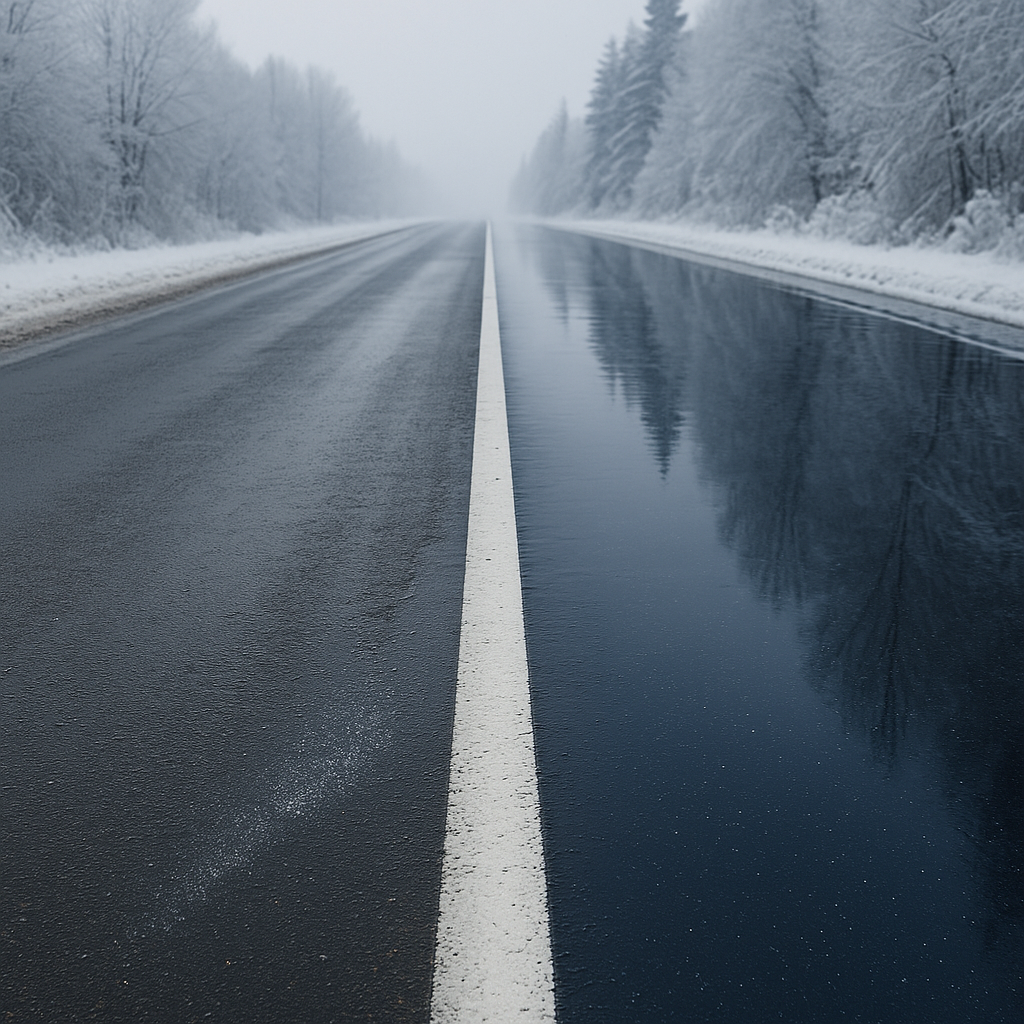
If the road looks wet, it is wet
Black ice deceives even experienced drivers.
Visually deceptive but ice-cold roads are the most treacherous misperceptions in winter jobs and prime examples of common winter work misconceptions.
Black ice is especially dangerous because it is almost invisible and often mistaken for ordinary wet pavement. As one road-safety guide explains, “drivers often mistake these glossy patches for wet pavement or fail to notice them entirely,” and black ice typically forms when temperatures hover around 32°F / 0°C.
(Source: SimpleTire – “How to drive on black ice: top tips” — https://simpletire.com/learn/tire-maintenance-safety/how-to-drive-on-black-ice)
❄️ Winter Driving Tips for Truckers: Stay Safe on Icy Roads!
Wet Road vs. Black Ice: How to Decide the Difference
| Observation | Wet Pavement | Black Ice |
| Tire spray from other vehicles | Visible | Almost none |
| Surface shine | Slight, dull | Glass-like, mirror smooth |
| Outside temperature | Well above freezing | Near or below 32°F / 0°C |
| Steering feel | Predictable | “Light” or delayed response |
The skill of reading the road is not a luxury — it is a survival skill for winter job beginners trying to understand what is true or false, a real winter job reality lesson rather than stories built on seasonal work myths
Today’s trucks are capable of doing things hence everything.
Of course, the software contributes but they are not against the laws of physics.
ABS, traction control, and stability control don’t help to produce any force where there is none. The function of these systems is purely and solely to help a driver who is in a good place already, looking at the road correctly, and not them being used for fixing poor judgment or bad surface conditions. Beginners often have this misconception that as long as the dashboard shows lots of diversions and signals, the truck will be self-rescuing. The debt to be paid in winter roads is not only intuition but they demand caressing, pre-emptive braking, and the realization that sensors do not create friction by magic. The feeling of what the tires are doing, a driver tense the steering wheel accordingly, and the truck reacts, that is, intervenes subsequently.
Carrying trailers is much easier in a winter season if they are not loaded.
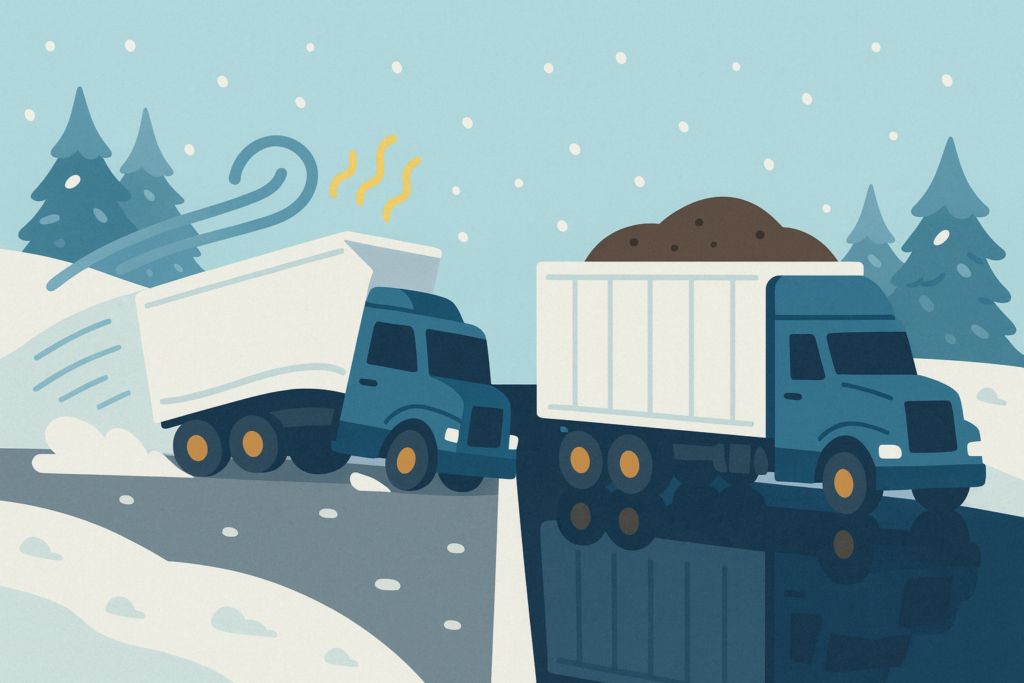
Empty trailers are kites in cold winds.
A full trailer will push the drive tires down onto the pavement and hence, increase traction. A light trailer, in this respect, acts just the opposite. It is often the case that novice drivers come up against this reality directly upon discovering that the crosswind has lifted and displaced the back of the trailer. A physical trailer/cargo particularly reacts to sharp turning or braking which can easily cause it to slide or swing much better on icy surfaces. Old school drivers usually express their preference for a “working load” due to the storms, the reason being that the weight levels all the things. Light ones can be easier to pull up the hill, but in winter the tricky part is not power, it is control.
Chains are always a solution to the problems of traction.
Chains are a tool, not a guarantee.
They provide assistant at low speeds but when misused or installed incorrectly, they fail. Most of the time, the novices are getting ahead of themselves installed the chains too late, that is, once they are stuck or spinning. Chains must be paired with slow but steady inputs and proper terrain in order to provide traction. When used on bare pavement, they may break; on ice, they help, but only if they are properly tensioned. In heavy snow, they are effective, but only if you do not exceed the manufacturer’s advised speed limits. Chains are actually the means to help you move, not to help you hurry the things. As you treat them with the mentality that they are a magical fix, they more often than not, backfire and cause trouble.
What veteran drivers know is everything and nothing will catch them off guard.
The icy roads are a humbler for all.
Veterans, nevertheless, still face surprises — they just pick themselves up much faster and easier. Seasoned drivers show their respect to winter for they have gone through experiences when the road wavered or visibility was less than zero. Their arm’s length from rookies is not superpower skills but rather the regularity of their habits such as checking the weather ahead, gentle throttle signaling the road, proper speed changes, and no sudden moves. In the same way, even the most experienced drivers make a misjudgment because of a shadow or a patch of black ice — winter does not care about how experienced you are. What experience does bring along is the capacity of the mind, first of all, to stay calm and not to panic but to make small corrections instead.
Taking it slow is definitely the best way to be safe while driving.
Slowness can really be dangerous.
Reduced speeds will joggle traffic flow, and also the needed momentum lost. It is very important to decrease the speed of the vehicle, however, too much crawling below the general speed of traffic on a highway will provoke the other drivers to make risky overtaking. On hills, too slow may cause spin or spin-outs, on curves, irregular speeds may shake the trailer up. Winter driving safety is all about the right speed, which is the equilibrium between the grip, bend in the road, visibility, and the behavior of traffic. Your safest time is when your speed is what the tires and the situation allow, not when your driving is ruled by fear about the main decisions taken.
Antigel is a fuel problem universal solution.
Antigel is effective only before gelling develops.
Preparations for the winter must be done beforehand: mix fuel, fill tanks, treat before anything else. Once the diesel has thickened, antigel can’t reverse it that’s why many of the first-year drivers discover this the hard way on a cold morning when their truck just doesn’t want to start. To be truly ready for winter means to be aware of falling temperatures, using winterized fuel in the right areas, and keeping tanks above half to reduce moisture. Antigel is part of the war plan, not the plan itself. Use it early, use it consistently, and make sure you understand it is your fuel that it protects – not the one that has already been damaged and needs fixing.
The Truth About Winter Work for Beginners: It Is a Practical Framework
Four Pillars of Safe Beginner Winter Work
| Pillar | What It Means | Why It Matters |
| Preparation | Truck, fuel, winter gear, emergency kit | Removes avoidable risks |
| Traction | Tires, weight, chains, speed discipline | Determines control |
| Awareness | Reading the road, checking the weather | Prevents surprises |
| Mindset | Patience, confidence, calm | Reduces panic and overreaction |
These are the truths veterans follow — not the myths rookies hear.
Where Beginners Should Focus During Their First Winter Season
What is real is always better than what is half true.
- Improve your observation skills.
- Patience is a tool, not a brake pedal.
- Build your winter habits early.
Final Thoughts: Winter Is Not a Monster But a Method
Your first winter job, any beginner winter jobs, is going to be tough — but not in the ways people claim.. Winter rewards preparation, visualization, and calm decision-making, and it grounds you in winter job reality instead of rumors about winter job challenges.
Mini FAQ: Beginner Winter Work Myths — Quick Answers
1. Do novices really have more issues in winter, or is it a myth?
Mostly newcomers do have problems, but not because of their driving skills. Winter work simply increases the number of decisions required by the brain, which are shifting surfaces, shadows, wind, and temperature drops. The struggle is a part of the learning process; the progress is what counts.
2. Is black ice a thing that you can get to know the signs of, or is it always elusive?
This one’s interpretable. Tire spray, temperature, surface shine — these unusual signs tell the story ahead of time. It doesn’t require magic, it is observation.
3. Are snow chains necessary for beginners?
No. They benefit only when used at slow speeds, on the proper terrain, and at the beginning of the drive. Chains are not a virtuosity lady — they are just a tool that performs according to the conditions.
4. Why do empty trailers feel so unstable in winter?
This is due to the fact that the drives without weight don’t get the traction to the pavement at all. A strong wind, a piece of ice, or even a lane change can turn an empty trailer into a truck wanting to drift by itself.
5. Don’t experienced drivers make winter mistakes at all?
Definitely not. They recover just because their habits are entrenched. Even the best drivers are often mislead by shadows or thin ice — winter is a teacher to all.
6. Is driving slower always the safest strategy?
Not necessary. Only if the speed corresponds to the road condition. Driving under the limit can be as dangerous as speeding. The safest speed is the one where your tires have control and your trailer is going in a straight line.
7. Is the use of antigel the way to fix frozen diesel?
No. Once the diesel has already thickened, nothing but antigel can initiate the gelling. It is effective prior to the formation of the gel so winter preparation is done before not when the truck balks his start.