
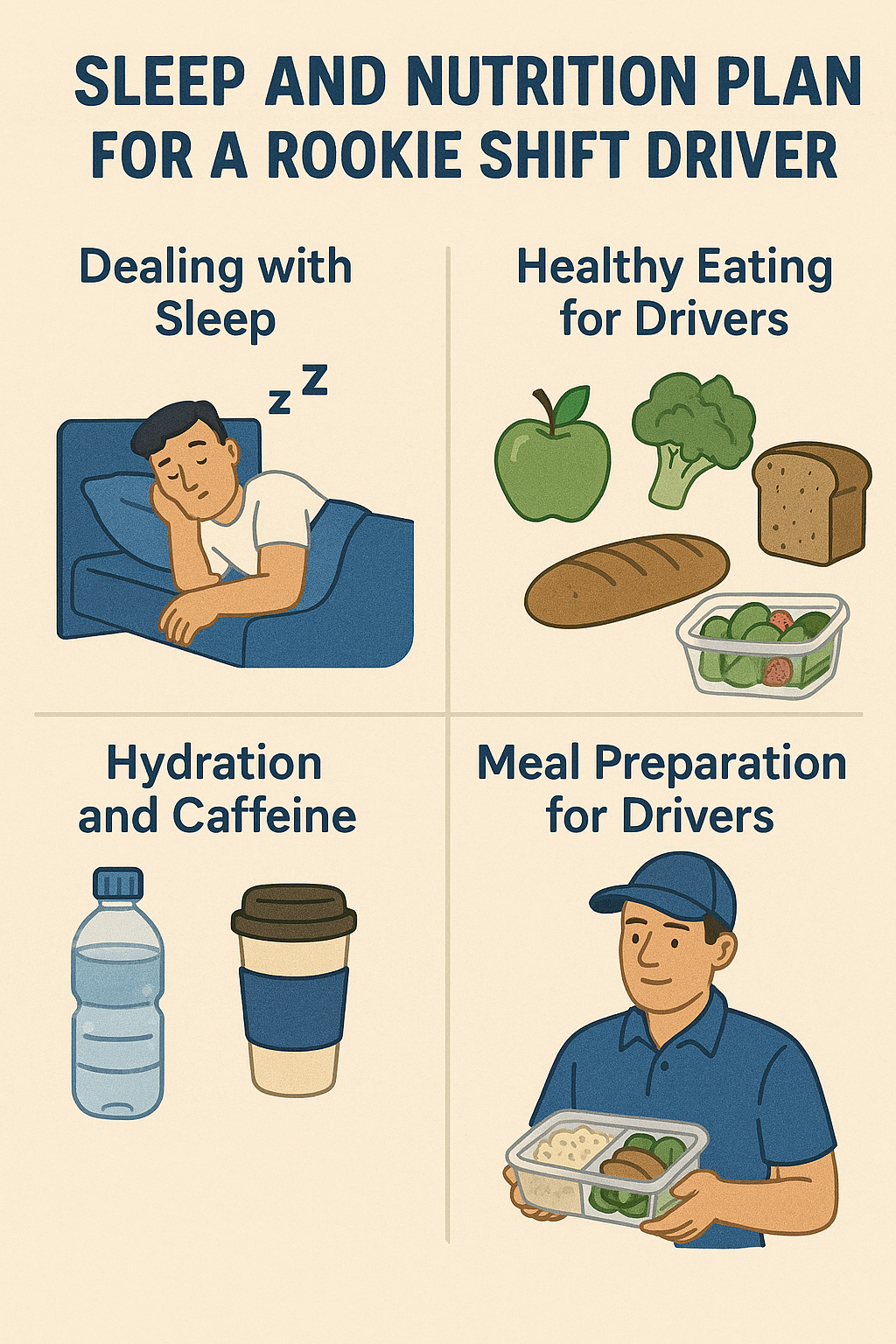
Starting a CDL career is tough in itself, and making it as a rookie shift driver adds a whole different level of challenge to it. You are not just learning how to back a trailer, handle logs, and talk to dispatch; you are also trying to keep your body in good working order by driving odd hours, eating as you go, and sleeping in different places.
If you do not draw up a proper sleep and nutrition plan for a rookie shift driver from the first day, you will end up suspecting your focus, mood, and safety will suffer. Bad sleep and poor food choices over the period can be the very annoying factors to your motivation, health, and even the length of your trucking career – you can try it but it would be hard for some new drivers to do it. Practical sleep tips shift workers rely on are especially important for rookies adjusting to this lifestyle.
This guide has the aim of helping you to come up with a rookie driver sleep plan and a realistic shift driver nutrition plan that is applicable in real trucking situations, which are not in a perfect world where you are always off at 5 p.m. We will go through dealing with sleep, a healthy eating for drivers guide, hydration and caffeine, meal preparation for drivers, and practical routines that support rookie driver health, driver performance, and safe driving habits.
Comprehending the Shift Work Trials
Most people’s bodies are built around a basic cycle of waking up in the morning, being active during the day, and sleeping at night. As a rookie shift driver, you disrupt this pattern already on the first day in your job. Your circadian rhythm — the internal clock that controls your energy levels, hormones, digestion, and sleep — is suddenly exposed to false impressions like irregular dispatch times, night shift driver demands, early morning check-ins, unexpected waiting at shippers and receivers, long-haul stretches with no real breaks, etc.
The result is common:
- you feel sleepy instead of alert when driving,
- you cannot fall asleep when you finally get a chance to rest,
- you have an appetite which comes at odd times due to irregular schedule nutrition,
- you want sugary, fast food, and heavy meals,
- your mood is not stable and you are irritated easily.
This is the main reason why rookie shift driver sleep and shift work diet are no side issues—they are must-have skills for any serious professional. Overcoming them at the start gives you a big advantage over other rookies who are simply “wing it.”
The Role of Nutrition for Shift Drivers
Your truck can only run on diesel. Your body can only run on food, water, and sleep. The fuel that is of low quality is going to worsen your performance, increase your state of tiredness, and affect your safety out there.
A good driver nutrition guide for shift work highlights:
- constant energy rather than sugar spikes,
- keeping you alert without overstimulating your nervous system,
- alleviating digestion problems from the effects of sitting for long hours,
- thinking of food that helps your body to recover quickly in-between shifts, supporting shift worker recovery.
For a shift driver, food is not simply comfort — it is part of your driver fatigue management strategy and overall driver fitness.
Eating Timing and Composition
Making turns on routes and having different starting times may not translate into you having your meals at the regular breakfast-lunch-dinner hours, but that is okay. It is structure that matters, not clock time.
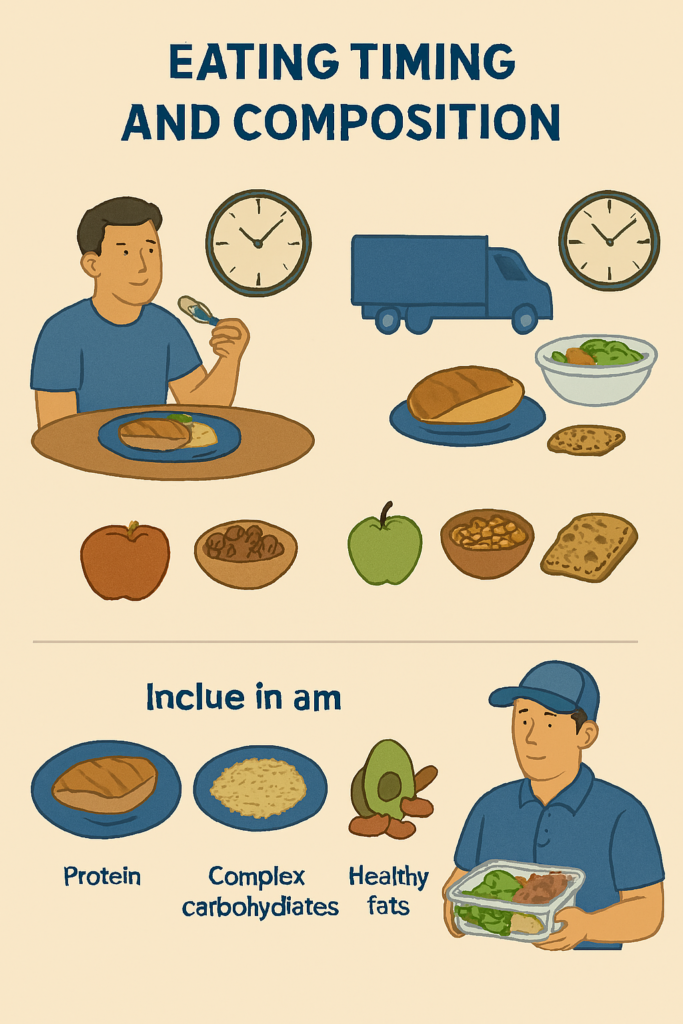
The main meal plan generally consists of:
1 main meal before your shift,
1 smaller meal mid-shift,
1 recovery meal after the shift,
2–3 small snacks spaced out between.
If you want to be consistent in your fuel, you should include in all main meals:
- Protein – for muscle repair and long-lasting energy
- Complex carbohydrates – for steady fuel
- Healthy fats – for hormone balance and satiety
- Fiber and micronutrients – for digestion and immunity
Sample Balanced Meals for a Rookie Shift Driver
| Situation | Meal Example | Why It Works for Shift Drivers |
| 1–2 hours before shift | Oatmeal with nuts + boiled eggs + banana | Slow energy release, good focus, lightweight but filling |
| Mid-shift (break) | Chicken & brown rice bowl + steamed veggies | Sustains energy during long driving blocks |
| End of shift | Grilled fish + salad + small portion of potatoes | Helps recovery without overloading digestion before sleep |
| Light pre-sleep snack | Cottage cheese + handful of berries | Protein + carbs support recovery and calm sleep |
This kind of structure still helps rookie driver health stay at a good level even if the schedule is often unpredictable.
Easy Stuffing with Snacks
Snacks are your electricity backup someday, but some of them are a must-have always. When you are about to arrive at the location but your stomach is growling and you do not want the only option to be fast food, you really must be prepared.
The best energy boosting foods for drivers are:
- almonds, walnuts, pumpkin seeds
- Greek yogurt cups (low sugar)
- apples, oranges, bananas
- carrot sticks with hummus
- whole-grain crackers with peanut butter
- low-sugar protein bars
- beef or turkey jerky (low sodium)
Don’t make snacks like these a habit:
- cookies and pastries,
- candy bars,
- super greasy fast food,
- oversized sugary energy drinks.
These foods may be enjoyable for 15 minutes, then they can ruin your focusing for hours. Good snacks are the small, daily decisions that support shift driver wellness long-term.
Sleep Tips for Shift Workers
Now we come to the hardest part: the sleep issues of shift workers. As a rookie, you are used to new ways, new equipment, and more responsibility and you are in a process of adjustment. Plus, you might be trying to sleep in a cab that is moving, doing it in noisy truck stops, or when it is daytime and you are supposed to be staying awake.
But here is the truth:
You can’t drive well and safely if you treat sleep as a luxury.
Make Sleep Friendly Environment
You are not able to control the outside world but you can certainly control some things inside your sleeper.
Basic toolkit for better long haul driver sleep includes:
blackout curtains or covers, earplugs or white noise, eye mask, supportive pillow, blankets for temperature control, and setting your phone to Do Not Disturb.
Before sleep, try to:
- avoid heavy meals,
- limit screen time,
- do a light stretch,
- drink a small amount of water.
These simple things make your rookie shift driver sleep deeper and more restorative, supporting an optimal sleep schedule even with limited hours.
Balance Your Sleep Cycles and Schedule
Though you will never have a perfect and steady schedule as a shift driver, you could still build a good sleep plan based on your own knowledge.
Example Rookie Driver Sleep Patterns by Shift Type
| Driver Type | Ideal Main Sleep Window | Extra Recovery Option |
| Night shift driver | 7:00 a.m. – 1:00 p.m. | 20–30 min nap before shift |
| Early-morning start | 7:00 p.m. – 1:00 a.m. | 1–2 hour nap mid-day |
| Rotating schedule | 4–5 hour core sleep + 2h nap | Nap before the hardest stretch |
| Long-haul irregular | 5–6 hour core sleep + micro-naps | Short 15–20 min naps |
Main ideas for a rookie driver sleep plan:
- keep sleep blocks stable,
- use micro-naps smartly,
- treat your main sleep as essential.
Hydration and Caffeine Management
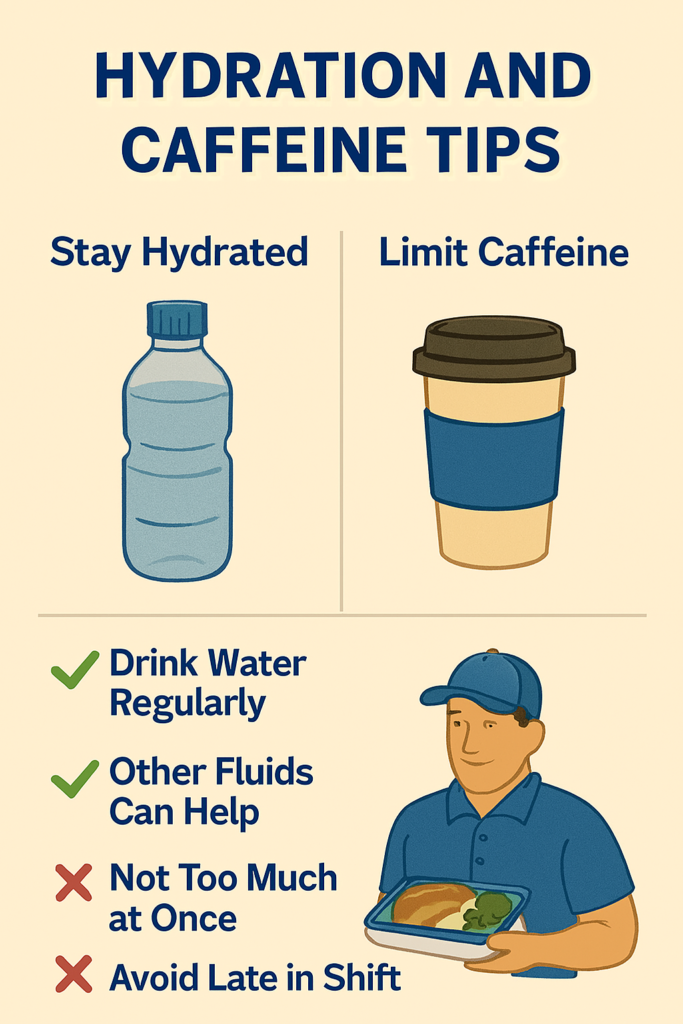
Most drivers think of caffeine before water. That’s wrong. Hydration supports focus, reaction time, and energy long before caffeine enters the picture.
Optimal Fluid Intake
Aim for:
- 2.5–3.5 liters of water a day,
- electrolytes in heat,
- low-sugar beverages.
Signs you’re not drinking enough include dry mouth, dark urine, and trouble focusing.
Hydration supports shift worker recovery and overall driver health.
Caffeine Consumption Guidelines
Smart caffeine habits:
- use caffeine early in the shift,
- avoid it near your sleep window,
- choose low-sugar options,
- limit daily intake to 200–300 mg.
Caffeine should help you — not hide the fact that you need real rest.
Meals Planning and Practical Tips
Healthy eating is about preparation, not perfection. If you rely on random food options, your shift driver diet will always be inconsistent. Planning even simple meals ahead of time protects you from fatigue, sugar crashes, and unnecessary fast-food stops. A little structure goes a long way. When drivers build small, repeatable routines — packing meals, rotating snacks, organizing supplies — nutrition becomes predictable rather than stressful, even during demanding shifts.
Making Meals Balanced (Meal Prep for Drivers)
You don’t need to be a chef — just prepared.
Cook lean proteins, add whole grains, pack vegetables, store them properly, and reheat with a 12V lunchbox.
Examples include:
- chicken + rice + broccoli,
- turkey wraps,
- Stews,
- oatmeal packs.
These habits make your shift driver nutrition plan automatic.
Packing Healthy Snacks
Your snack bag is your defense against junk food. Use nuts, fruit, low-sugar bars, crackers, hummus, jerky. Rotate weekly to avoid boredom and junk-food temptation. Keeping a small cooler stocked also helps prevent impulse buys at truck stops and ensures you always have steady, clean energy available on demanding shifts.
Conclusion
Being a rookie shift driver is mentally and physically tough. You are learning the job, dealing with dispatch, managing irregular hours, and trying to stay healthy.
A well-built sleep and nutrition plan gives you stability.
When you:
- follow a structured rookie driver sleep plan,
- build a balanced shift work diet,
- stay hydrated and use caffeine wisely,
- and maintain a simple, effective meal plan…
you protect your health, your license, your income, and everyone on the road. Healthy sleep and smart food choices are not extras — they are core parts of your trucking toolkit.