
Preface
A dispatcher is most often the first person that a new CDL holder interacts with after getting a job at a trucking company. They take care of the freight, communicate with shippers and receivers, plan routes and above all this, they become the key person for drivers who start their trucking jobs as a new truck driver in entry-level trucking jobs under real trucking industry expectations and working with a dispatcher day to day. Dispatchers give the drivers a little snapshot into the daily doing of the trucking workflow; dealing with the receiving, managing plan changes, delivering freight on time, effective communication, and road alterations. This is the view that CDL school misses as it tends to focus more on the technical aspects of driving a truck.
For most of the time, new drivers are likely to change their jobs and that is why they often feel the struggle to make such a transition. They have to take on some of the responsibilities of a commercial vehicle. They must follow the company’s standards and at the same time, they have to comply with the customers’ requirements. Finally, they need to build a trustful driver-dispatcher relationship. Early exposure to the expectations of a dispatcher as well as the mandatory requirements is tantamount to the successful commencement of your CDL and the formation of a safer, smoother first year in the trucking industry. Above all, it gives the new drivers a chance to create realistic expectations and carve out the ideal start to their new trucking career, a kind of CDL ideal CDL start that they can build on.
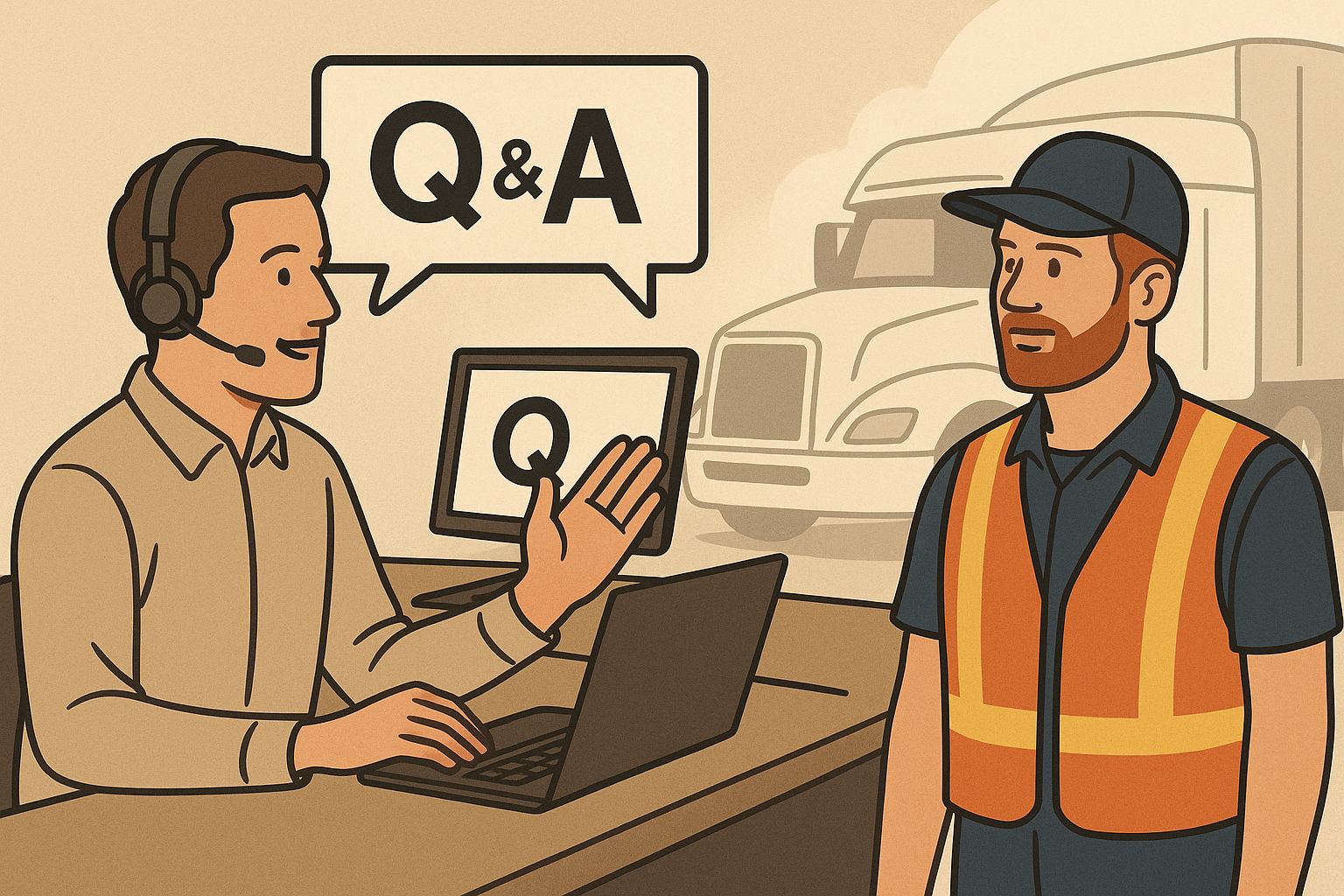
The Q&A straw format being detailed will provide the summary of what dispatchers and entry drivers really expect, what steps new drivers should take in regards to the preparation, and what everyday habits create long-lasting accomplishments. This structure fills the role of a CDL driver Q&A tool, CDL holder, and a fresh CDL advice guide that is written quite casually. This information brings together years of hands-on industry experience and the statutory guidelines issued by the Federal Motor Carrier Safety Administration (FMCSA) – https://www.fmcsa.dot.gov/regulations
Dispatcher Q&A: What New CDL Drivers Should Know
Q1: What is the top expectation dispatchers have from new CDL drivers?
Best drivers’ number 1 expectations are communication from the driver which is both reliable and proactive. Every truck driver even the top drivers are sometimes faced with what can be called a stressful day with truck mechanics such as breakdowns, delays, dorad issues, overweight cargo, bad weather, and routes that have been missed. A dispatcher simply can’t help the driver if they have no idea what’s going on. Looking at the issues that are being escalated, it is that fresh CDL driver who sends updates before anything goes out of hand that earns the trust right from the start and that proves what the dispatcher wants from him and quite simply, how he can be successful.
- Good communication habits are:
- calling before a delay becomes critical
- sending ETAs without being asked
- updating after leaving shippers or receivers
- notifying dispatch if conditions change
- confirming instructions rather than guessing
Perfection is not what a dispatcher is looking for at all but they want to have at least a feeling of respect, a sense of responsibility, and monumental honesty.
Q2: To what degree of autonomy are new CDL drivers expected to demonstrate?
New drivers generally assume that dispatchers want to micromanage them. However, the reality is, dispatchers prefer initiators. A fresh CDL holder who when he comes to the job treats it with utmost seriousness is able to make decisions independently and thus he knows that CDL training expectations go on and on past the classroom.
New drivers are supposed to be like this:
- Know their route before starting the engine
- Be aware of the dangers that the weather can cause
- Use weigh stations correctly
- Scale heavy loads before leaving a shipper
- Check delivery instructions in advance
- Manage their hours-of-service securely
The dispatcher is not there to check on you but to help you. When the new driver shows maturity, independence, and self-initiative the truck dispatcher is usually the one to give him better miles and consistent loads first. This is a common way how an ideal start in the first trucking job that is actively working with a dispatcher looks is when you are doing the right things.
Q3: What common mistakes do dispatchers see with new CDL drivers?
New drivers frequently go through a, the period of time which is the hardest. The chief mistakes that dispatchers make are often:
- not telling that they are going to be late
- not accepting the company routing
- not scaling before leaving the shipper
- mixing trailer numbers
- minor damage that was not noticed during the pre-trip
- disqualification of HOS resets
- not asking the questions
- sending unclear text updates
Each mistake is solvable. However, to begin with, the driver has to own up. The dispatchers value taking responsibility more than covering up the mistakes, and also many of the situations turn out to be personal freight dispatcher tips that a driver remembers long after their first truck driving experience.
Q4: What are the basic skills a fresh CDL driver must have?
As a newcomer in the field of CDLs, road experience is not what a person needs to get hired, but there are some primary skills which must be developed from the very first day. These foundational skills have a decisive impact on how effectively and safely a newcomer is going to operate freight in real situations.
First, vehicle control and spatial awareness are among the key factors that should not be compromised in driving. A beginner who has just received a CDL should learn to navigate an extended, heavy vehicle through busy traffic, confined warehouse docks, city blocks, and on and off of highways. This will incorporate fine-tuning braking, acceleration control, correct lane positioning, and trailer off-tracking awareness. Breaking down to basic programmatic aspects, these are the applicable elements of ‘CDL holder guide’ manual.
Secondly, pre-trip inspection discipline is one of the essential characteristics, not just a formality. New drivers need to be trained in a systematic and consistent way to check tires, brakes, lights, coupling systems, fluids, and air lines. The pre-trip checks give the newly qualified CDL drivers the opportunity to build trust and be recognized as reliable and professional.
Third, being aware of service hours and learning how to manage time effectively are important from the earliest stages. A new driver needs to be able to work out a plan for driving, breaks, refueling, and resting that is not only in line with the laws but also does not entail rushed decisions. In the guide of any CDL holder, one milestone is learning to think in driving time frames instead of merely miles.
Fourth, communication skills are more important than many rookies suppose. A simple, yet clear communication with dispatchers, shippers, receivers, and safety departments is the best way to deal with small problems on the worksite and therefore to avoid costly ones. A fresh CDL driver should learn when to make inquiries, report delays, and clarify instructions as opposed to just making a guess.
Lastly, situational judgment and risk awareness make the difference between winding up safe or in trouble. This includes knowing when to slow down, when to stop driving for weather, and when the conditions go beyond your personal comfort or technical skills. Good judgment is not based on confidence but the ability to assess boundaries and take action in time.
In essence, a young CDL driver manages to flourish by the skill of learning the fundamentals, not taking shortcuts. Any credible ‘CDL holder guide’ will reaffirm that solid and good basics like controlling, inspections, planning, communication, and judgment overshadow anything like driving “like a veteran” too soon.
What Dispatchers Expect vs. What New Drivers Think
| Dispatcher Expectations | What Fresh CDL Drivers Often Assume |
| Regular, brief updates | “Dispatcher will check on me” |
| Calm professionalism | “Tone doesn’t matter if I’m stressed” |
| Basic trip planning | “GPS handles everything for me” |
| Immediate reporting of problems | “I’ll wait and see if it fixes itself” |
| Respect for HOS rules | “Dispatcher keeps track of violations” |
| Asking questions early | “Questions make me look inexperienced” |
Communication: The Critical Component of a Smooth Start
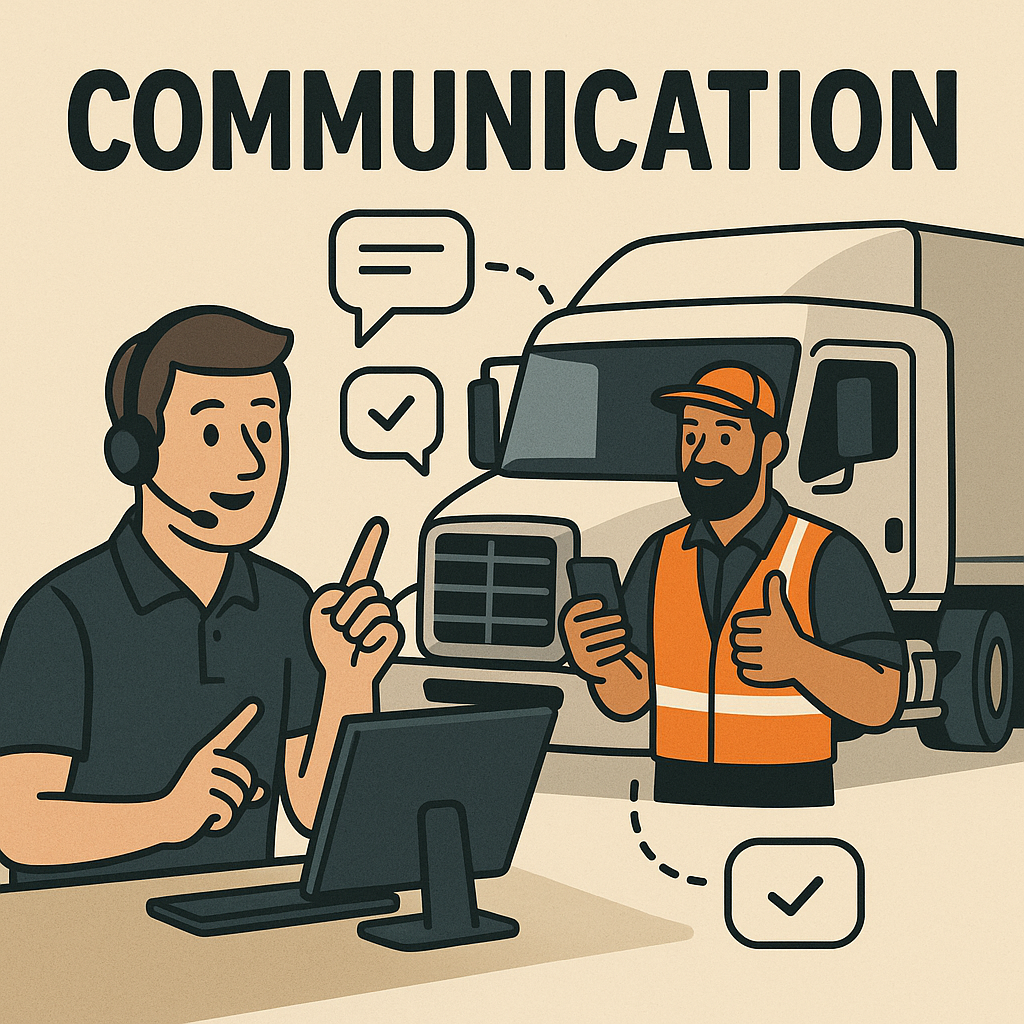
The most successful trucking company operates on a tight sched. The most successful trucking company has a tight operation schedule. Appointment times, load windows, and customer performance metrics all demand communication that is back to the point. Dispatchers won’t fix problems they don’t know about which is why it’s important for the driver, right from the beginning, to make sure that dispatch department has accurate information, which is at the heart of trucking industry expectations and dispatcher expectations in any fleet.
The proper dispatcher communication is about:
- notifying dispatch when empty or loaded
- reporting breakdowns immediately
- confirming addresses and instructions before departure
- giving accurate ETAs and revising them when necessary
- sending macro messages promptly in ELD systems
Drivers who are maintaining a clear communication often receive:
- more miles
- priority loads
- better home-time consistency
- less stressful assignments
Because dispatchers trust them.
Practical video resource:
For a real-world explanation from an experienced driver about building a healthy dispatcher–driver relationship, watch:
Trucking 101: #1 Tip for a Healthy Dispatcher Relationship
“Red Flag” Habits vs. “Ideal Start” Habits
| Red Flag (Bad for New Drivers) | Ideal Start Habits |
| Emotional reactions | Calm, factual communication |
| Avoiding phone calls | Answering quickly and clearly |
| Relying only on GPS | Verifying routing + restrictions |
| Moving before reading load notes | Reviewing instructions carefully |
| Assuming someone else will fix it | Reporting issues immediately |
| “I didn’t know” attitude | Proactive learning and preparation |
The Dispatcher’s Perspective: Why Expectations Matter
Dispatchers are the main point of contact for the completion of loads, on-time delivery, customer feedback, and managing their fleet effectively. A newcomer truck driver directly influences these metrics. When a driver communicates poorly, the dispatcher’s reputation suffers, and so does that of the company.
The understanding of these factors makes new CDL holders look at things from a bigger perspective:
- delays damage customer contracts
- poor updates destroy trust
- missed appointments affect future lanes
- communication failures cause preventable stress
When a driver understands the dispatch system, he is no longer a liability but a valuable asset, and this shift is a major part of new driver success in line with broader trucking industry expectations.
Real Dispatcher Tips for Fresh CDL Drivers
List 1: Top Dispatcher Tips for a Successful CDL Start
Always scale heavy loads before leaving the shipper
Take pictures of BOLs, seals, and trailer damage
Use voice calls for urgent issues-not texts
Keep water, food, and emergency gear onboard
Send updates when weather becomes unsafe
Notify dispatch immediately after a missed turn
Keep your HOS legal; never drive fatigued
List 2: Professional Habits That Set Fresh CDL Drivers Apart
Speak respectfully even during stressful situations
Repeat back instructions to avoid misunderstandings
Keep your rig organized and paperwork ready
Show up early for appointments when possible
Log everything correctly-dispatch relies on accuracy
Ask questions early instead of guessing
Be willing to learn from feedback rather than defending mistakes
How New Drivers Can Build Trust with a Dispatcher
A reputation built on the consistency is what trust is founded on. Dispatchers are very fast to pick up those drivers who act like professionals with their cargos. The rookies who show a willingness to communicate, adhere to procedures, and stay organized are compensated with:
- better load assignment
- more miles
- fewer overnight waits
- earlier home-time scheduling
- dispatcher advocacy with customers
Drivers who do a good job make dispatchers’ lives easier – and dispatchers return the favor. This process of building trust through a dispatcher supporting a successful CDL start is at the core.
Understanding Stress in the First 90 Days
The trucking life first phase can be tough. New drivers are acquainted with:
- tight docks
- long wait times
- not known cities
- unpredictable weather
- pressure to perform
- Tiredness
- Loneliness
- overload of information
Dispatchers expect these issues but they appreciate the drivers who are able to clearly tell them about these challenges instead of just pulling away. Your dispatcher will turn into a partner on the road, not an opponent, which is an important part of setting realistic expectations for new drivers.
Common Situations Where Dispatchers Expect Immediate Updates
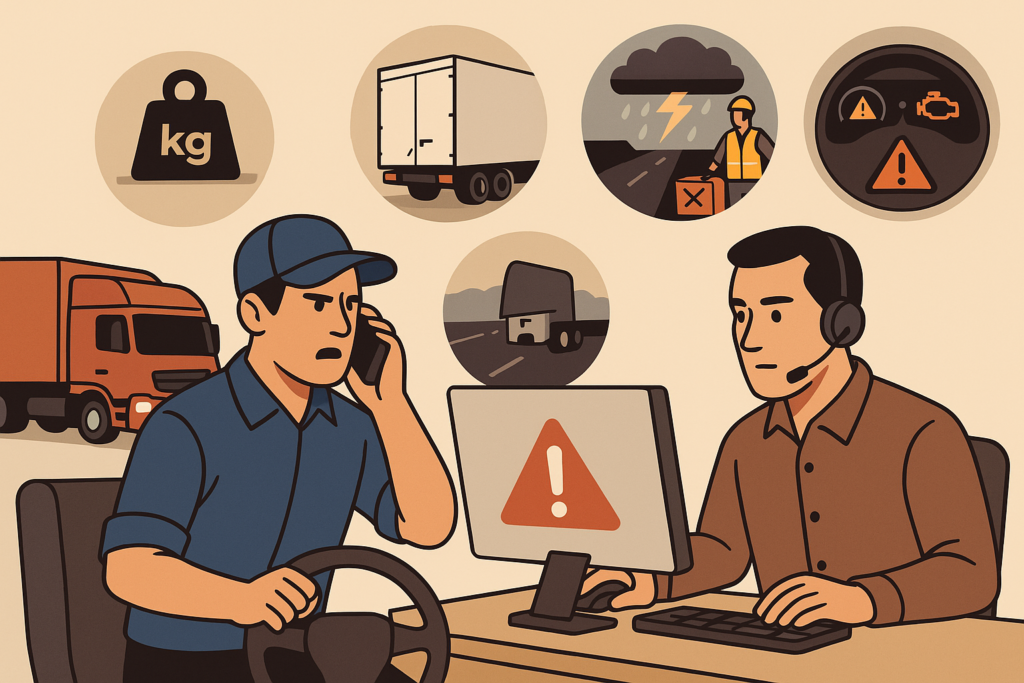
New drivers are sometimes in the dark about what is necessary to be communicated at once. In situations like:
- you might miss your appointed time
- the load is heavy
- the shipper is loading the wrong product
- there are some weather conditions that make traveling unsafe
- your trailer has damage
- you can’t find the right dock
- your truck has some mechanical problems
- a receiver who refuses the load or paperwork
- dispatch must know immediately about it if it affects safety, timing, or cargo basically.
These patterns become personal freight dispatcher tips that define how you handle communication beyond your first trucking job.
FAQ — Expectations for New CDL Drivers (Extended Edition)
1.Should a fresh CDL driver call even for small delays?
Yes. A 10-minute delay is easier to manage than a 2-hour delay discovered too late.
2.Does a dispatcher expect a rookie to know HOS perfectly?
Not perfectly — but dispatch expects basic competence and a willingness to verify rules before driving, which fits normal CDL training expectations.
3.Is it bad to admit confusion or fear about certain situations?
No. Dispatchers prefer honesty. Fear leads to accidents; questions lead to solutions.
4.Should new CDL drivers rely on company routing?
Yes, unless it is unsafe or impossible. Always call before deviating.
5.What communication style works best with dispatchers?
Short, factual, structured updates. Dispatchers handle dozens of calls an hour.
6.Does the attitude affect the load assignments?
Absolutely. Calm, professional drivers often receive better freight and smoother schedules. These patterns are exactly what most fleets describe as CDL job readiness.
A dispatcher expects stability and safe discipline — and fatigue is the main fear of new driver. These methods on how truck drivers stay awake help you stay alert without doing reckless things.