
Preface
Truck driving is one of the quickest ways to get into a stable, good-paying job in the United States. It is extremely different from all the professions that usually take years of university education and plunge you in debt; trucking is a low-cost risk to take if you are ready to try it out and it has a clear instruction path: go through CDL training, pass your examinations, buy the gear, and tough it out for the first 90 days until you start making decent money. For many people starting a career or going through a career change cost transition, trucking becomes an attractive option because of its straightforward career training requirements and comparatively lower professional training fees.
Nevertheless, “low-cost” does not mean “free.” Thus, new drivers tend to forget about the high career cost of commencing a trucking career that involves not only tuition and administrative fees but also equipment purchases, traveling expenses, food costs, and unexpected bills that come in the first months. These new career expenses resemble business startup costs in other industries because they include equipment cost, insurance costs, operating expenses, overhead costs, and various certification costs that accumulate quickly — sometimes even including small marketing costs related to relocation, job applications, or onboarding logistics.
This article intends to elucidate the actual amount you will be required to cough out while venturing into trucking. We will illustrate this using an elaborate realistic financial model. We would examine CDL school tuition, licensing fees, driver equipment, first-3-months living expenses, ongoing operational costs, and a practical cash-flow plan. Whether you are just changing careers or starting out in the industry for the first time, these insights into costs will help you develop your career launch budget accurately and build a more confident approach to financial planning and income generation as you move toward long-term profitability in the field.
Investments in CDL Training (Your Foundation)
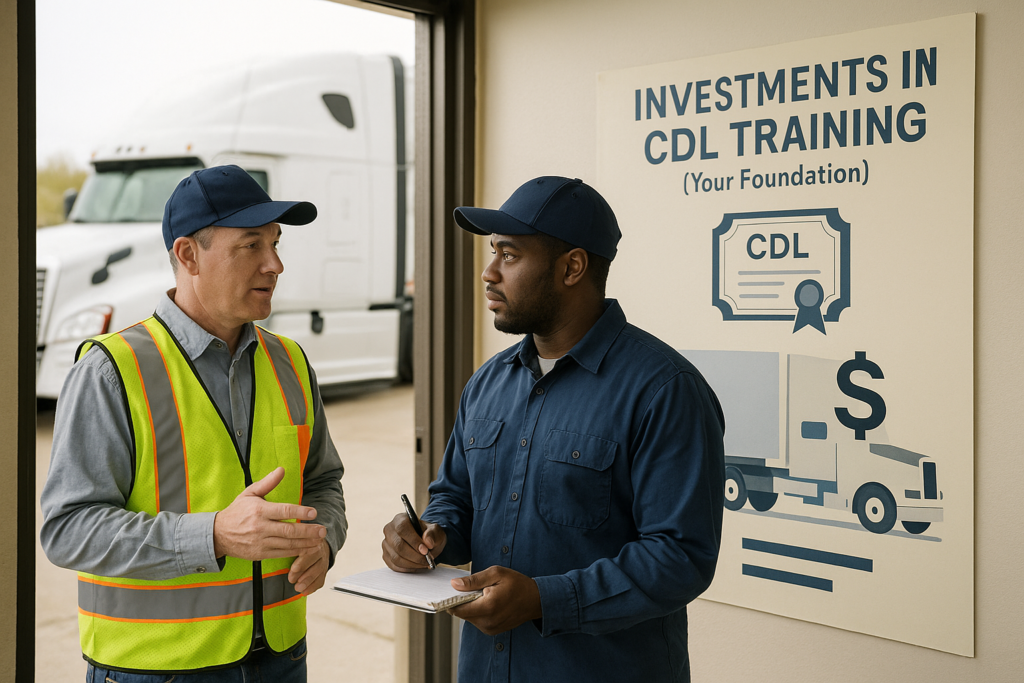
Moving up to the next academic echelon as a driver is only achievable when you take up CDL training. This is both your largest and most vital initial investment. Your expenses are coming mainly from the choice of training program, the reputation of the school, the demands of your state, and whether your employer covers part of the training. These early decisions shape your projected expenses over the long term because training forms the base of your startup expenses.
Tuition Costs: What You Actually Pay for
The great majority of CDL programs belong to one of the three categories: community colleges, private commercial driving schools, and company-sponsored training. In whatever way you choose, the main costs associated with the program are unavoidable, as tuition is the most significant outlay tied to your career training path.
Typical CDL school price ranges:
- Standard private CDL school: $3,000–$7,000
- Premium or extended programs: up to $10,000
- Community college CDL programs: $2,500–$6,500
- Company-sponsored training: $0 upfront, but requires a 12–24-month work contract
These figures mirror the professional training fees seen in other fields but concentrated into a shorter period, making them more accessible for those starting a career quickly.
Additional Training-Related Costs
Training isn’t limited to tuition. New drivers often overlook the administrative expenses incurred before starting school or taking CDL exams — which function similarly to certification costs in other professions.
| CDL-Related Expense | Typical Cost |
| DOT Physical Exam | $50–$150 |
| Drug Screening | $30–$100 |
| CDL Learner’s Permit (CLP) | $10–$90 |
| Written Exam Fees | $20–$60 |
| Skills Test (Road Test + Pre-Trip + Backing) | $50–$300 |
| CDL Issuance Fee | $50–$175 |
| Endorsements (HazMat, Tanker, Doubles/Triples) | $5–$100 each |
The administrative cost estimation is projected to be around:
👉 $150–$700, it varies in accordance to your state’s requirements and the number of qualifications you need.
These initial licensing factors form part of the unavoidable start-up costs that are common to any regulated profession.
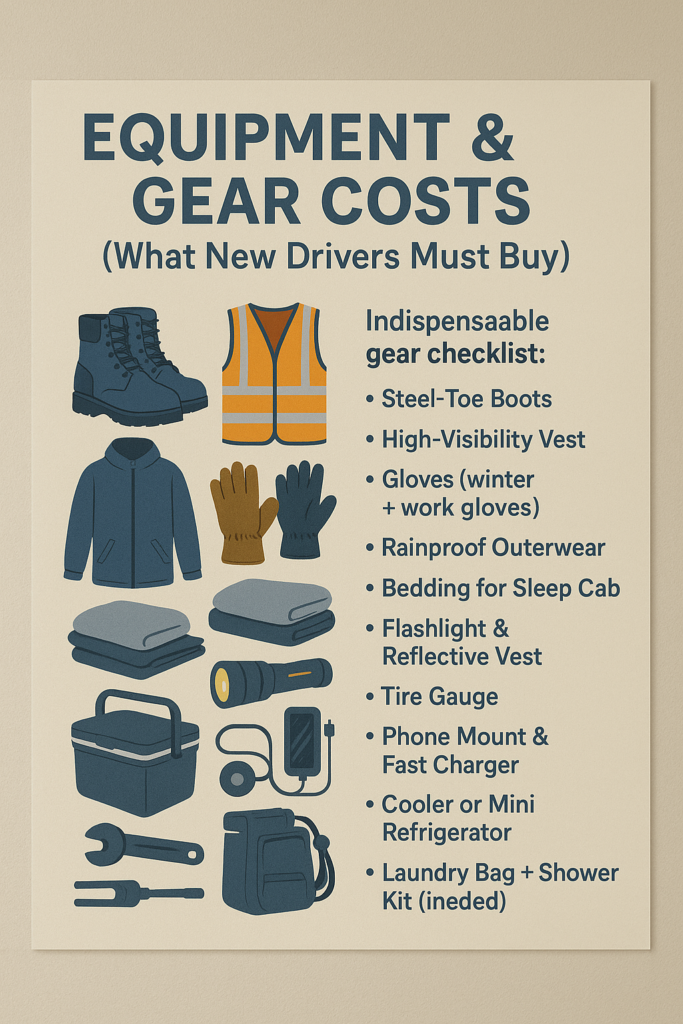
Equipment & Gear Costs (What New Drivers Must Buy)
After school comes the time for the first job when each new driver has to buy the gear that is necessary to work comfortably and safely. Company drivers pay far less than owner-operators, but even a minimal setup contains layers of essential equipment the same way small business startup costs do.
The Equipment Every Driver Needs
One of the important aspects of being a truck driver is owning a set of basic tools and personal equipment. While only a handful of companies offer a few items to new hires, the majority choose to buy their own. This is where essential equipment expenses become similar to overhead costs in other fields: you simply cannot perform your job properly without them.
Indispensable gear checklist:
Estimated cost for the equipment list
| Equipment Category | Cost Range |
| Safety gear | $100–$250 |
| Clothing & Weather protection | $150–$400 |
| Tools & Accessories | $50–$150 |
| Bedding & Personal items | $50–$150 |
| Food Storage (Cooler, utensils) | $50–$100 |
| Total Equipment Cost | $350–$1,000 |
A frugal setup will cost you approximately $350−$500, while a comfy and long-term setup may cost over $1,000, depending on your equipment cost choices and personal comfort standards.
Living Expenses in the First 3 Months (The Critical Survival Period)
Upon attaining your CDL, drivers venture into a phase where they have rising costs but inconsistent income. This phase is heavily shaped by your first three months expenses — a period where you experience substantial running costs without fully stabilized income generation. Some companies require extended training fleets or OTR mentorship, which may stretch over weeks and create unpredictable cash flow.
To understand your startup expenses accurately, it is essential to break them into three types: food, housing, and travel.
Food, Housing, and Travel Costs
Housing
This could be small if you continue living at home. However, the majority of trainees often have to:
- Go out of state for training
- Stay in extended-stay hotels or student dormitories
- Rent temporary housing while searching for the first job
Common housing costs for the first 1–3 months:
$300–$800 for shared or low-budget housing
$1,000–$2,000 for extended-stay hotels or short-term rentals
If relocating to a high-cost area, housing may double your new career expenses.
Food & Personal Expenses
Truckstop food is considerably more expensive when compared to self-cooking.
Average new driver food budget:
Frugal eater: $150–$250/month
Average: $300–$500/month
Transportation
Expenses here may include:
- Fuel used to travel to CDL school
- Bus/flight tickets to employer orientation
- Local transportation for medical appointments or testing
A standard estimate is $150–$400.
On-the-Road Operating Costs
Even if you are working for a company, your first months will include unavoidable operating expenses:
- Paid showers (unless using reward programs)
- Laundry fees
- Replacement clothing or gear
- Snacks, drinks, road meals
- Phone data upgrades for GPS & dispatch apps
- Occasional hotel charges during breakdowns
Depending on the person:
- Low-end: $150–$300/month
- Realistic: $300–$600/month
These are overhead costs that silently accumulate.
Career Startup Administrative Costs
While company drivers avoid the large overhead of owner-operators, a range of administrative expenses still applies at the beginning of a trucking career.
Insurance, Certifications & Background Checks
TSA Background Check for HazMat: ~$86.50
TWIC Card (for port access): $125.25
Optional add-on certifications (e.g., Smith System training)
These certification costs contribute to your total business startup costs in the same way as licensing fees do in other professional fields.
The Financial Model for the First 3 Months (Cash Flow Planning)
To make it easier for drivers to view projected expenses clearly, here is a transparent cash-flow evaluation for the initial 90 days.
Low-Budget Start (Conservative Scenario)
Designed for drivers minimizing every expense:
- Community college or sponsored CDL program
- Shared housing or staying with family
- Only basic equipment
- Minimal travel expenses
- Expect low mileage in the first month
Estimated 3-month cost:
| Category | Cost |
| Training + Licensing | $3,000–$4,500 |
| Housing | $300–$600 |
| Food & Living Expenses | $450–$900 |
| Equipment | $350–$500 |
| Miscellaneous | $150–$300 |
| Total | $4,250–$6,800 |
Growth-Oriented Start (Comfortable Scenario)
For trainees who want more convenience and better essential equipment:
- Private CDL school ($6,000–$10,000)
- Single hotel room or long-term rental
- More flexible travel options
- Strong long-term financial planning mindset
Estimated 3-month cost:
| Category | Cost |
| Training + Licensing | $6,000–$10,500 |
| Housing | $1,000–$2,000 |
| Food & Living Expenses | $900–$1,500 |
| Equipment | $600–$1,000 |
| Miscellaneous | $300–$800 |
| Total | $10,000–$15,000+ |
Cost Optimization Strategies for New Truck Drivers
These strategies help reduce startup expenses without compromising safety or training quality.
List 1: Save on Training
Select a sponsored CDL program
Apply for workforce development grants
Compare community college vs private school tuition
Avoid unnecessary additional classes
List 2: Save on Equipment
Buy only essential equipment at first
Upgrade once your income stabilizes
Use affordable retailers (Walmart, Harbor Freight, Amazon)
Avoid overpriced truck-stop merchandise
List 3: Save on First-Month Living Costs
Prepare meals in advance (meal prep)
Use truck-stop loyalty programs for free showers
Split housing with another trainee
Use travel rewards for orientation flights
Verified YouTube Resources for Budgeting & CDL Cost Breakdown
Both links are fully operational:
Honest CDL Cost Breakdown — Real Truck Driver Insight
How Much Does Truck Driving School Cost On Average? – Learn As An Adult
Hidden Costs of CDL School — What New Drivers Miss
How Much Does it Cost to Get a CDL? – Driving Academy
These videos offer practical guidance for financial planning, covering unexpected startup expenses and realistic income generation timelines, helping new drivers prepare financially for training, equipment, and early career challenges during their initial months.
Conclusion
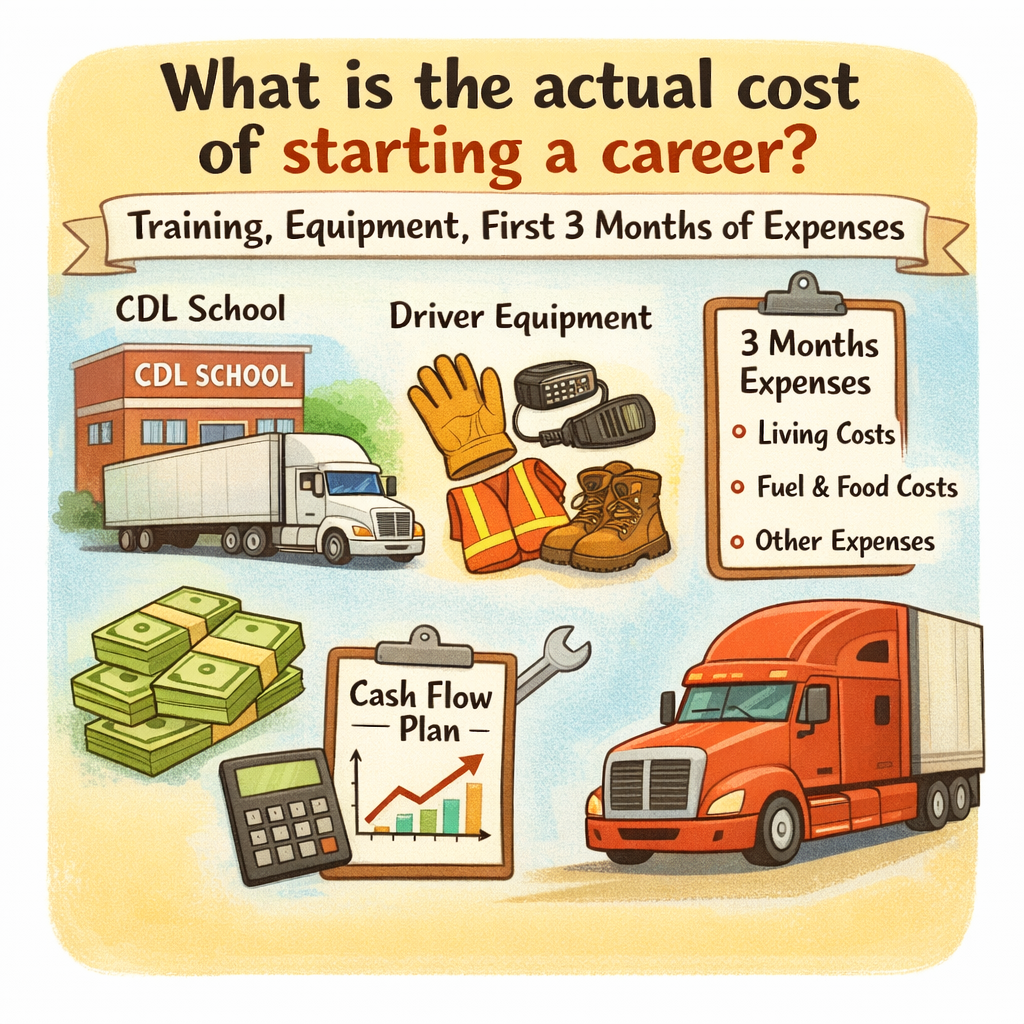
With thoughtful financial planning, starting a truck-driving career becomes manageable even during the first three months when income is inconsistent. The actual cost of starting a career varies based on training decisions, equipment purchases, housing choices, travel needs, and personal spending habits.
Most new drivers spend:
- $4,000–$7,000 on a minimal startup
- $10,000–$15,000+ for a comfortable, growth-oriented start
Understanding these business startup costs, tracking your running costs, and preparing for the first three months expenses ensures a smoother transition, faster income generation, and long-term stability in the trucking profession.